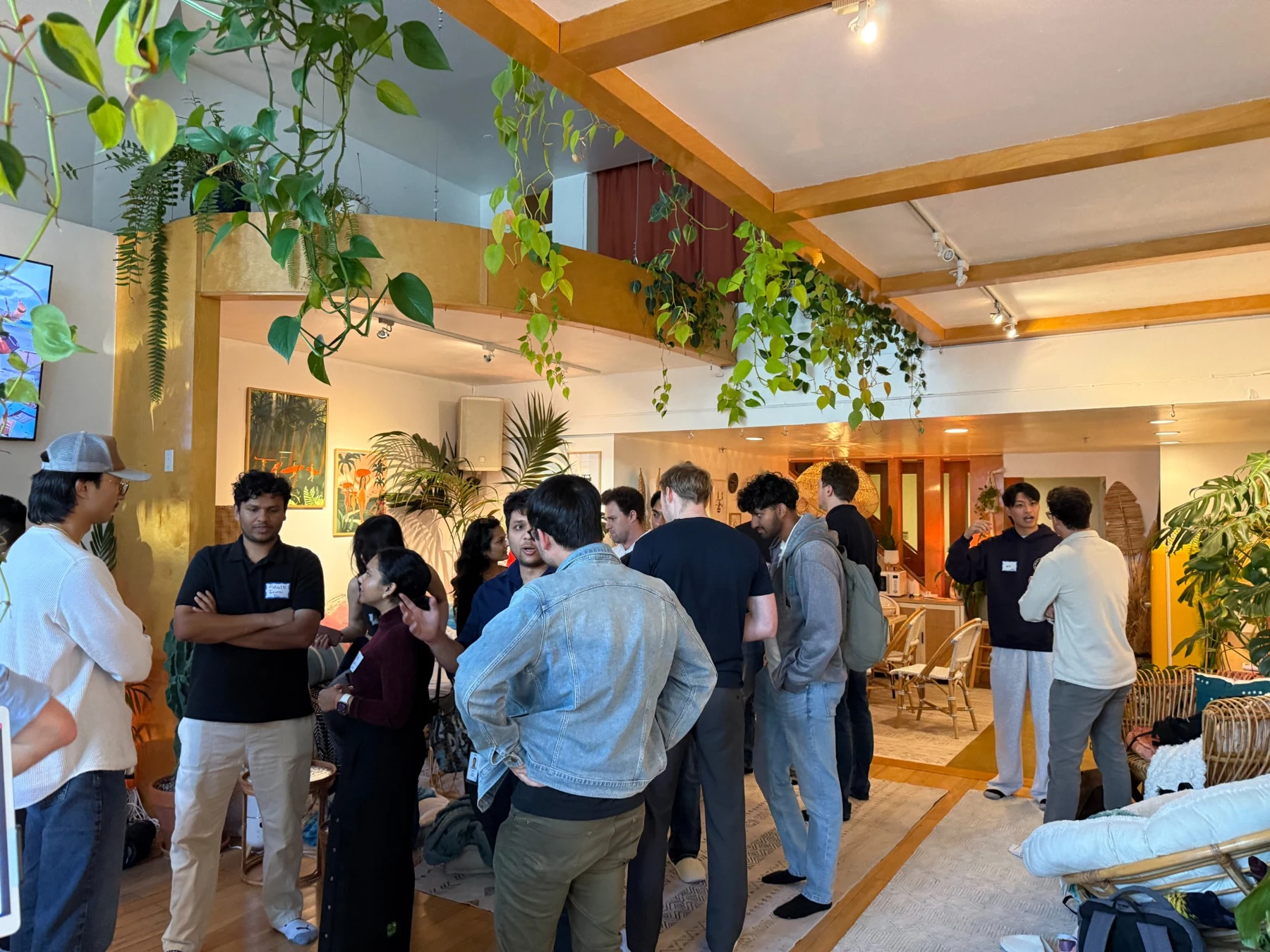
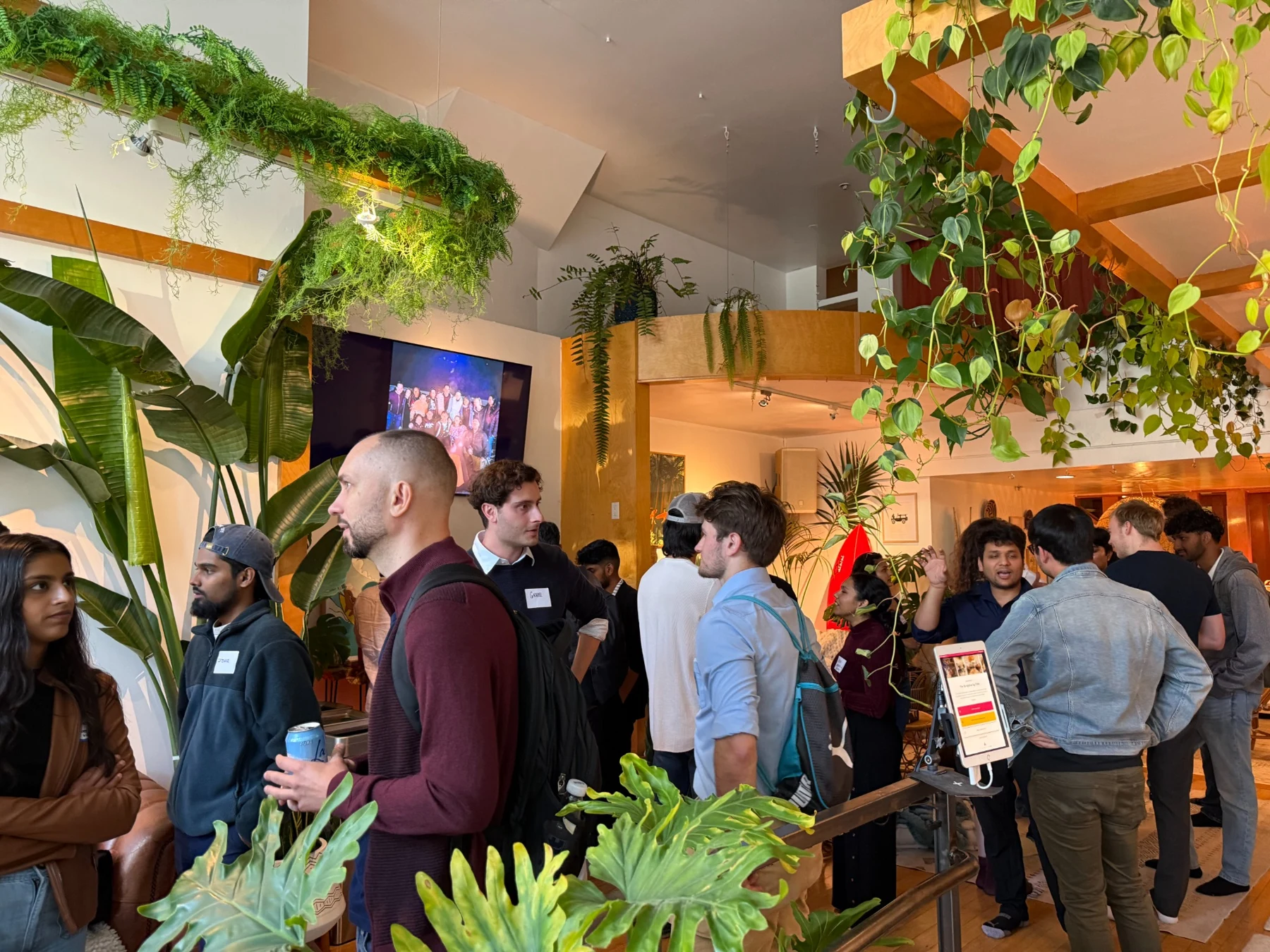
On October 7, forty founders and builders came together in San Francisco to meet potential cofounders. Some arrived with a product already underway. Others brought experience they wanted to contribute to someone else’s idea.
Preparing for the gathering meant understanding both groups: what people were working on, what they needed, and where there might be enough common ground to start a useful conversation.
understanding who was coming
The 137 detailed applications helped shape how I organized the evening. Several applicants were already working full time on their ideas, with prototypes, early users, waitlists, or revenue. Joining them as a cofounder could mean stepping into work that was already moving.
Among applicants who already had an idea, the areas they were building in included:
- 70% AI/ML
- 42% B2B
- 41% consumer
- 22% healthcare
- 12% e-commerce or marketplaces
- 9% fintech
These categories overlap, but they helped identify shared interests and gave me a starting point for grouping people.
The applications also revealed how much responsibility people hoped a cofounder would share. Of the 103 applicants seeking someone to join their idea:
- 85 selected more than one role they wanted that person to fill.
- Nearly half selected three or more roles.
That made me think about the conversations people need to have beyond identifying complementary skills. Two people might agree that one will lead the technical work and still have different expectations about product direction, customer conversations, fundraising, or who makes the final decision. Meeting in person gives them somewhere to begin exploring those expectations.
giving conversations a starting point
We opened with time for everyone to meet freely, then divided into four groups by industry. AI/B2B SaaS drew the largest group, followed by consumer and marketplace.
Grouping people this way gave them some shared context. They could get into the problems they were considering and hear how others approached related questions. People began finding others whose interests overlapped with their own, and those conversations set the pace for the evening.
As the organizer, that required paying attention to where people were already finding value and giving those exchanges room to continue.
what the evening taught me
The venue booking ended before the conversations did. People continued outside while I returned the space, something that had also happened at the New York gathering.
I came away thinking about how much the conditions around an introduction matter. Reviewing applications and grouping people thoughtfully can make it easier to find a starting point. Enough time together allows the conversation to move beyond an introduction into how someone thinks, what motivates them, and what working together might involve.
For future editions, I want to allow more time for that part. The evening’s clearest outcome was people choosing to continue their conversations after the gathering had finished. I’d like the format to give them more room to do so.